Published: 07/28/2026
By Jamie Hansen, Global Health Communications Manager
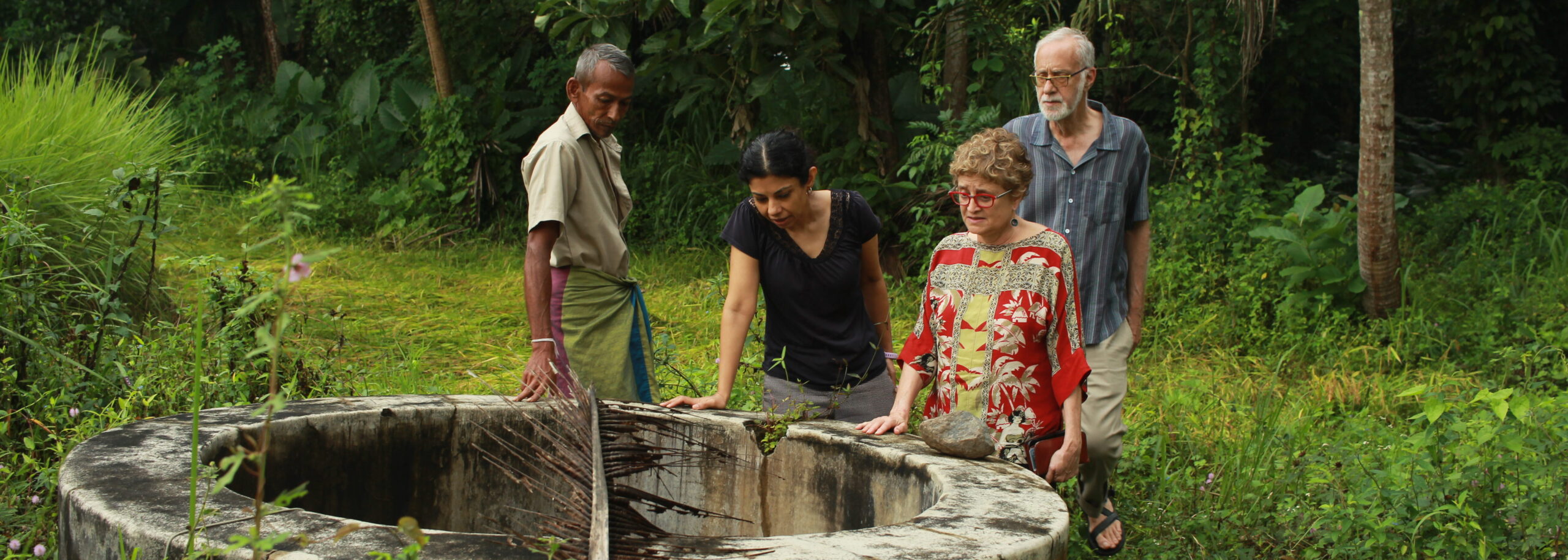
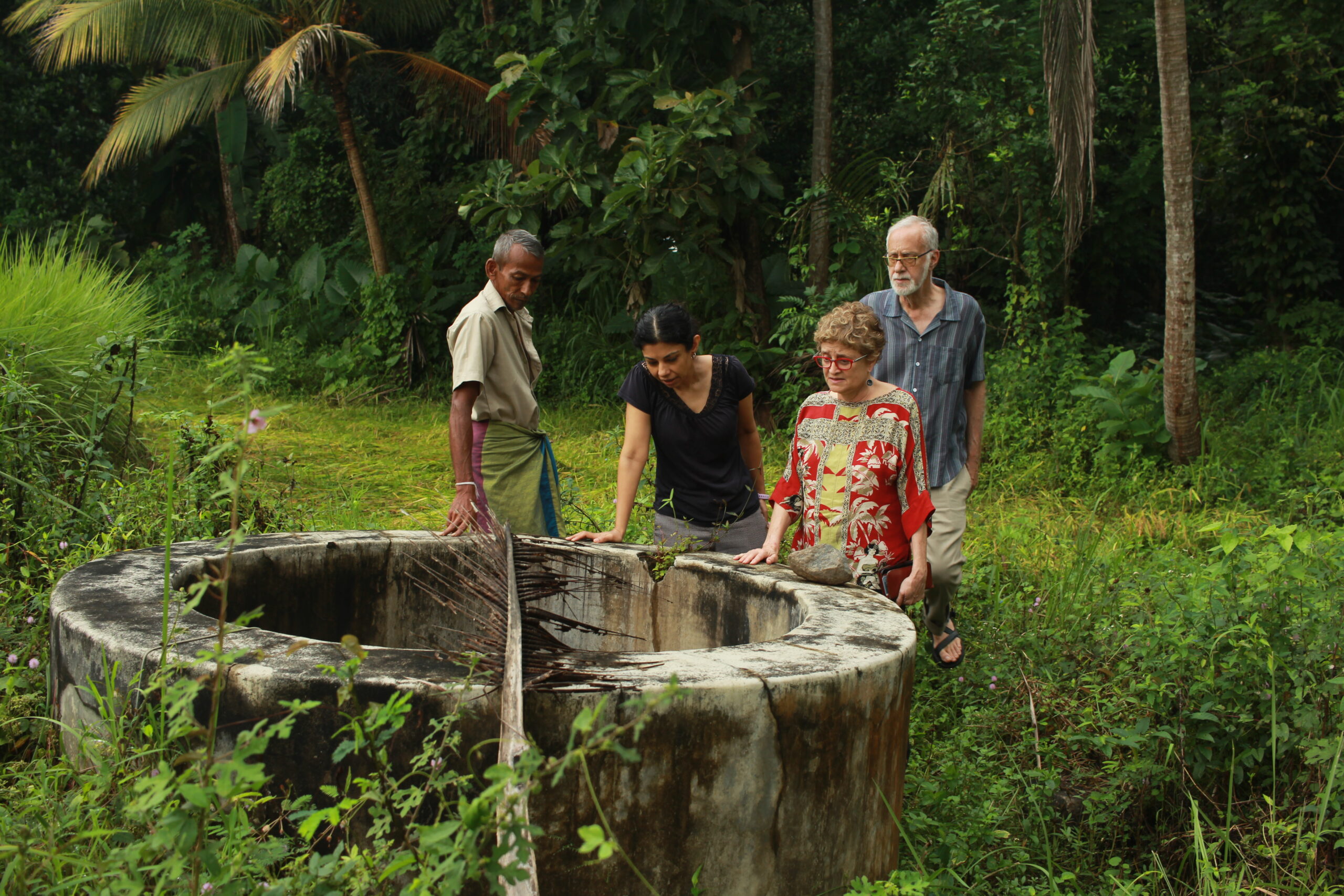
Photo: A Sri Lankan man with kidney disease shows Dr. Anand and colleagues the household well as they investigate possible causes.
When Shuchi Anand, MD, MS, interviewed for nephrology fellowships in the early 2010s, her desire to pair a career in renal medicine with global health met with confusion. Few programs combining nephrology and global health existed at the time.
Today, she is a nationally recognized kidney specialist and leads international research to understand a kidney disease of unknown origin impacting farmworkers in hot, rural regions of the world. She considers her 2012-2013 Global Health Emerging Scholars (GHES) fellowship a turning point that enabled her to pursue her twin passions for nephrology and global health.
“GHES was a launchpad for my career,” said Anand, who recently joined UC Davis as associate dean for global health and the first onco-nephrologist at its Comprehensive Cancer Center.
Anand chose Stanford for her fellowship because her interest in global health was encouraged by Stanford nephrologist Dr. Glenn Chertow. She soon connected with Michele Barry, MD, who arrived at Stanford in 2011 to launch the Stanford Center for Innovation in Global Health. Through Barry, she learned about the GHES fellowship.
Anand spent her fellowship in New Delhi at the Centre for Chronic Disease Control under the mentorship of Dr. Dorairaj Prabhakaran, who was leading a study of chronic diseases in Delhi, Chennai, and Karachi. Anand worked within that study to assess the prevalence and risk factors for kidney disease, producing some of the first population-representative data on kidney disease in South Asia.
“Everyone had thought that kidney disease would be relatively rare in these urban populations, but it turned out to be similar to what we see in the U.S.,” she said.
A launchpad for sustained research impact
The fellowship yielded valuable research findings as well as lasting relationships and research capacity. Anand developed connections with local research staff, statisticians, and field teams that would sustain her research for years to come. These relationships became the foundation for her successful application for an NIH K23 career development award. This five-year grant enabled her to build on the research she started in India and proved critical to launching her independent research career.
The fellowship also taught Anand the importance of partnering with institutions that already have research infrastructure and motivated collaborators.
“Before the fellowship, I thought that global health meant going somewhere, setting up your own project, and starting from the bottom up,” she reflected. “But if you really want to know about population health at a large scale and conduct sustainable research, you need local collaborators with the infrastructure and personnel to conduct that research.”
Connecting dots across continents
While presenting her research at the World Congress of Nephrology in 2016, Anand made a connection that shaped the direction of her future global health research. She learned about an under-recognized problem, kidney disease of unknown origin (CKDu), from a Sri Lankan nephrologist. This condition leads to end-stage renal disease in young farmworkers in Sri Lanka and other hot regions around the world. The deadly condition, whose causes are still unclear, can devastate the lives of farmworkers, their families, and local communities.
In Sri Lanka, Anand worked with community researchers to follow healthy people over time to identify risk factors and exposures in those who eventually fell ill. She also helped communities build local capacity for research, including blood testing, gathering environmental samples, and testing interventions such as filtering drinking water for potential contaminants.
Anand’s ongoing research on CKDu in Sri Lanka now informs her efforts to understand unusually high rates of unexplained kidney disease among farmworkers in California’s Central Valley.
Central California is not yet a confirmed CKDu hot spot and lacks extensive analysis, largely due to a lack of data on a difficult-to-study population: migrant farmworkers. Anand and her collaborators are working to fill these gaps and expand what is known about this mysterious kidney disease by investigating the two regions in parallel.
Cultivating experts with local and global impact
Anand emphasized the value of programs like GHES, which enable scientists to develop their research skills while following their passions and interests, including global health.
“As developing scientists, we are much more motivated to gain experience, publish our findings, create connections, and develop other projects when we are interested in the topic,” she said. “Also, science benefits when we look across the entire world to investigate our questions, rather than staying within certain geographic boundaries.”
Anand’s research continues to build on the data from her original GHES project and now includes more than 10 years of follow-up on the populations first identified as having kidney disease. This work is revealing critical insights about kidney disease risk factors in South Asia that inform both her international collaborations and her work with diverse patient populations in the United States.
“Once we’re trained, we become good scientists who benefit our field in many ways, not only in settings outside the U.S., but also in settings inside the U.S.,” she said.
Once we’re trained, we become good scientists who benefit our field in many ways, not only in settings outside the U.S., but also in settings inside the U.S.
Shuchi Anand, MD
Continuing the tradition of global medical training
In her leadership role at UC Davis, Anand is committed to mentoring the next generation of global health researchers. One of her first priorities was ensuring trainees had access to the same type of transformative fellowship opportunity that launched her career.
“This is one of the best pathways to launch a career in global health,” she said.
Related Publications
- Prevalence of chronic kidney disease in two major Indian cities and projections for associated cardiovascular disease
- Prevalence of chronic kidney disease in two major Indian cities and projections for associated cardiovascular disease
- Water sources and kidney function: investigating chronic kidney disease of unknown etiology in a prospective study